Living in China Pros and Cons - What To Expect?
Foreign culture, cheap living, incredible food, and a tough language barrier, here is an honest rundown of the living in China pros and cons before you commit to a long stay.
 Selina Chen 陈丽明 EN ⇄ 中文 · Expat guide
 Living in China can be quite an experience. Its foreign culture, variety of foods, and difference in cost of living mean that there are a lot of pros and cons of living in China. So, if you are curious about living and working in China, here is a rundown of what you can expect when staying here for a longer period of time.
Living in China pros and cons at a glance
Before the detail, the short version. Life here trades convenience and low cost against distance from home and a genuine language wall.
The pros: low day-to-day cost, very low street crime, some of the best food anywhere, cheap and fast travel by high-speed rail, and a cashless economy that makes buying anything effortless once you are set up.
The cons: a hard language barrier, a walled-off internet, air quality that is much improved but still not clean by Western standards, and the paperwork that comes with being a foreigner on a visa. None of these are dealbreakers on their own. Together they are the reason “get used to it” is the honest advice most long-term expats give.
Pros of living in China
China is a pretty safe place to live day to day. Violent street crime is rare, and both locals and foreigners routinely report walking home late without a second thought. You can carry your phone in your hand on a busy street without expecting it to be snatched. That does not make it crime-free, phone scams and the occasional tourist-trap overcharge exist, but the baseline sense of physical safety is one of the first things people notice.
The cost of living is another reason to pack your suitcase. Everything is cheaper than most of the West, above all restaurants and everyday services. That said, the tier-1 cities are no longer the bargain they were a decade ago. A single person can live comfortably on under 1,000 US dollars a month in a tier-2 city, while Beijing or Shanghai realistically run 1,500 to 3,500 depending on how central you want to be. Rent is the swing factor: a one-bedroom in an expat-popular central district such as Jing’an in Shanghai or Sanlitun in Beijing sits around 870 to 1,250 US dollars a month, while the same money goes much further one tier down. Just like any other country, living in China has its pros and cons.

How is life in China for a foreigner? Genuinely interesting, if you lean into it. One of the underrated perks is how cheaply you can travel the country. Every Chinese city is a whole new world worth exploring, and you can reach most of them on an affordable high-speed train or fly there on a Chinese airline. The rail network in particular is fast, punctual, and cheap enough that a weekend somewhere new is a normal thing to do rather than a splurge.
Shopping is a favorite pastime for almost anyone who moves here. Between the sheer number of vendors and the cheap deals on every kind of product, you will have a never-ending spree of things to buy. Paying for goods in China with WeChat or Alipay makes the whole thing frictionless: you scan a QR code and you are done, no cash, no card. Since 2023 foreign cards link to both apps far more easily than they used to, which removed one of the classic early-days headaches for expats. Once you are set up, the cashless economy is one of the things you will miss most when you go home.
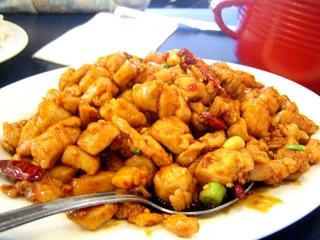
Then there is the food. If you think Chinese cuisine is fried rice, three delights, and spring rolls, you are in for a surprise, the food here bears little resemblance to what Western restaurants serve, and it is much better. Regional cooking varies wildly from one province to the next, so part of the fun is working your way through it. A few things to try early:
- Zongzi: Glutinous rice stuffed with beans and meat, wrapped in bamboo leaves.
- Gong Bao Chicken: Marinated chicken tossed with peanuts, dried chili, and Sichuan pepper.
- Wonton Soup: Thin wheat dumplings filled with pork, prawn, ginger, and spring onion in a light broth.
- Xiaolongbao: Shanghai soup dumplings, filled with pork and a mouthful of hot broth, best eaten carefully.
Cons of living in China
The first thing to correct is a myth: there is no single “Chinese climate.” China spans everything from subtropical Hainan and Guangzhou in the south to bitterly cold Harbin in the north, plus the alpine Tibetan Plateau in between. Most of the populated east sits in a monsoon zone with four real seasons, so whether you get a proper spring and autumn depends entirely on which city you pick. The north gives you cold, dry winters and hot summers with a big swing between them; the south gives you humid, sticky summers and mild winters where winter barely registers. Pick your city for the weather you can live with, because you cannot generalize it.
Air quality is the con that has changed the most, and the old apocalyptic-smog reputation is out of date. Beijing’s average PM2.5 fell to 27 micrograms per cubic meter in 2025, its cleanest reading on record and down roughly 70 percent in a decade, with 311 good-air days that year. The honest caveat is that “much better” is not “clean”: that figure is still well above the World Health Organization guideline, winter smog days still happen, and pollution has partly shifted west, with several inland provinces getting worse rather than better. If clean air is a hard requirement, check the specific city rather than trusting the country-wide headline either way.
The other everyday friction is the internet. Google, Instagram, WhatsApp, YouTube, and a long list of Western services sit behind the Great Firewall and simply do not load. Most foreigners work around it with a VPN, which is common but sits in a legal gray area, so treat it as a “usually fine, occasionally flaky” tool rather than a guarantee. Plenty of local apps fill the gap, WeChat does the work of five Western apps at once, but expect to rebuild your digital habits from scratch.
Buying property in China as a foreigner is another area where the rules are stricter than people assume. You generally must have lived or worked in the country for a year first, you are usually limited to one home for your own use, and all land is leasehold rather than owned outright. It is doable, but it is paperwork-heavy, and you want to understand the rules before you sign anything.
The language barrier
The language is the wall almost everyone hits. Mandarin is genuinely hard for English speakers, tones and characters both, and it takes real, consistent effort before you can hold a conversation without reaching for a translation app. Day to day you can get a long way on phone translation and patience. The problem is the high-stakes moments: a rental dispute, a hospital visit, a work contract, a negotiation where the numbers matter. When one of those comes up and getting it slightly wrong is expensive, it is worth bringing in a professional. For live meetings and appointments, that means hiring a Chinese interpreter rather than trusting an app to carry a conversation you cannot afford to lose.
The last minor gripe is scale. China’s cities are dense, so queues, packed metros, and traffic are simply part of the deal. Driving yourself is rarely worth it, arrival times are unpredictable, so most people default to the metro, high-speed rail, and ride-hailing. You adjust, but the sheer number of people is something a lot of newcomers underestimate.
Healthcare and everyday practicalities
Healthcare is worth understanding before you commit. Public hospitals are cheap and competent for routine problems, but they are crowded, run on their own paperwork-heavy system, and operate almost entirely in Mandarin, which is exactly the kind of high-stakes moment where the language barrier bites hardest. The big cities also have private international clinics and hospitals with English-speaking staff and Western-style service, and these are excellent but expensive, which is why most working expats carry private health insurance rather than paying out of pocket. Weigh it as part of the cost picture rather than an afterthought.
The other daily practicalities sort themselves out faster than you expect. Deliveries arrive within hours, mobile payment works everywhere, and the local super-apps handle food, transport, and bills in one place. The learning curve is front-loaded: the first month is a scramble of setting up a bank account, a phone plan, and the apps, and after that the day-to-day machinery of living here is genuinely convenient.
Living and working in China
Work is one of the stronger reasons to make the move, but the market has changed since the easy-visa years. If you plan to come here for a job, the realistic paths for a foreigner are corporate roles, specialist and technical positions, teaching, and adult or test-prep education. The catch is that the openings China actively wants filled are for qualified people: managers, engineers, designers, architects, and others with a skill that is not easy to hire locally. There is little demand for unskilled labor, because there is no shortage of local workers willing to do it for less. You will have the most luck applying as a:
- Skilled professional in a field a company cannot easily staff locally
- Designer or creative with a portfolio
- English teacher at a school, university, or adult program (more on that below)
Whatever the role, you will need an employer to sponsor a proper work visa. That sponsorship, rather than any general “move to China” status, is what actually gets and keeps you here, which is why the job tends to come first and residency follows it.
Working for a company
If you already work for a company back home and they offer to send you to China, that is close to the best-case scenario. Your employer handles the paperwork and visa requirements, and often arranges for your family to come too. These postings usually go to managers or specialists whose skills are hard to replace locally, which is common in multinationals opening or growing a market, where one specific person is key to getting a division off the ground.
If that is you, congratulations, because expat packages come with the most privileges: the better housing districts regardless of city, tuition paid at international schools, strong medical cover, and the general safety net of having your company behind you for whatever comes up. It is a genuinely comfortable way to live in China, and it removes most of the friction the rest of this guide describes.

Teaching English in China
For a long time, teaching English was the default way for a foreigner to get to China, and a lot of older advice still assumes that. It is out of date. In July 2021 the government’s “double reduction” policy banned for-profit tutoring in core school subjects, including English, for children in grades one through nine. Hundreds of tutoring centers closed, the online-teaching market that connected foreign teachers to Chinese kids largely collapsed, and the easy cram-school gold rush ended more or less overnight.
Teaching English is still a real path, it has just narrowed and formalized. The jobs now live in public schools, universities, licensed international schools, kindergartens, and adult or test-prep programs such as IELTS and TOEFL, rather than the after-school English factories that used to hire in bulk. Expect real requirements: a bachelor’s degree, a passport from a recognized English-speaking country, usually a TEFL or TESOL certificate and some experience, a clean criminal record, and a proper work visa. Smaller cities are more flexible on some of this than the tier-1 ones, but the days of arriving on a whim and finding a teaching job by the weekend are gone.
Where do most foreigners live in China?
If you have flexibility on location, it is worth knowing where the expat weight sits. The largest foreign communities are in the tier-1 cities, Shanghai, Beijing, Shenzhen, and Guangzhou, which offer the most English-friendly infrastructure, the widest job market, and the biggest international schools. A second tier of cities, including Chengdu, Suzhou, Hangzhou, and Xiamen, draws people who want a slower, cheaper, less frantic version of the same life. There is no single right answer: the best city for you depends on your work, your budget, and how much winter you are willing to put up with. If you are weighing options, our guide to the best places to live in China breaks the cities down side by side.
Conclusion
If you commit to China for a real stretch, you will almost certainly have an experience you never forget. It takes adjustment, the language, the internet, the sheer density of people, but once you are past the initial culture shock and into the real rhythm of the place, most people who stay end up glad they did. Weigh the living in China pros and cons honestly against your own priorities, and the decision about staying long term gets a lot easier to make.
Quick answers.
Can you live in China without knowing Chinese?
Is living in China expensive?
Where do most foreigners live in China?
Can you live in China permanently?
Your dates. My quote.
Twelve hours.
Send your cities, dates and product list. You'll get a fixed written quote, no obligation, no deposit to ask.
superinterpreter · selina@mychinainterpreter.com · Xiamen, China · UTC+8