Do I Need a Visa to Go to China?
The answer changed in 2024. Around 50 nationalities now get 30 days in mainland China visa-free, and many more get 10 days in transit. Here is who still needs a visa, and which of the 12 types fits your trip.
 Selina Chen 陈丽明 EN ⇄ 中文 · Travel guide
 For years the answer to “do I need a visa to go to China?” was a flat yes for almost everyone. That is no longer true. Since late 2023 China has opened its doors wider than at any point in its modern history, and if you hold the right passport you can now walk in for a month with nothing but that passport and a return ticket. Whether you are one of the lucky ones depends entirely on your nationality and how long you plan to stay, so read the exemptions below before you assume you need to visit a consulate. China is now one of the most sought-after countries to visit, and the entry rules have finally caught up with the demand.
What is a Chinese visa?
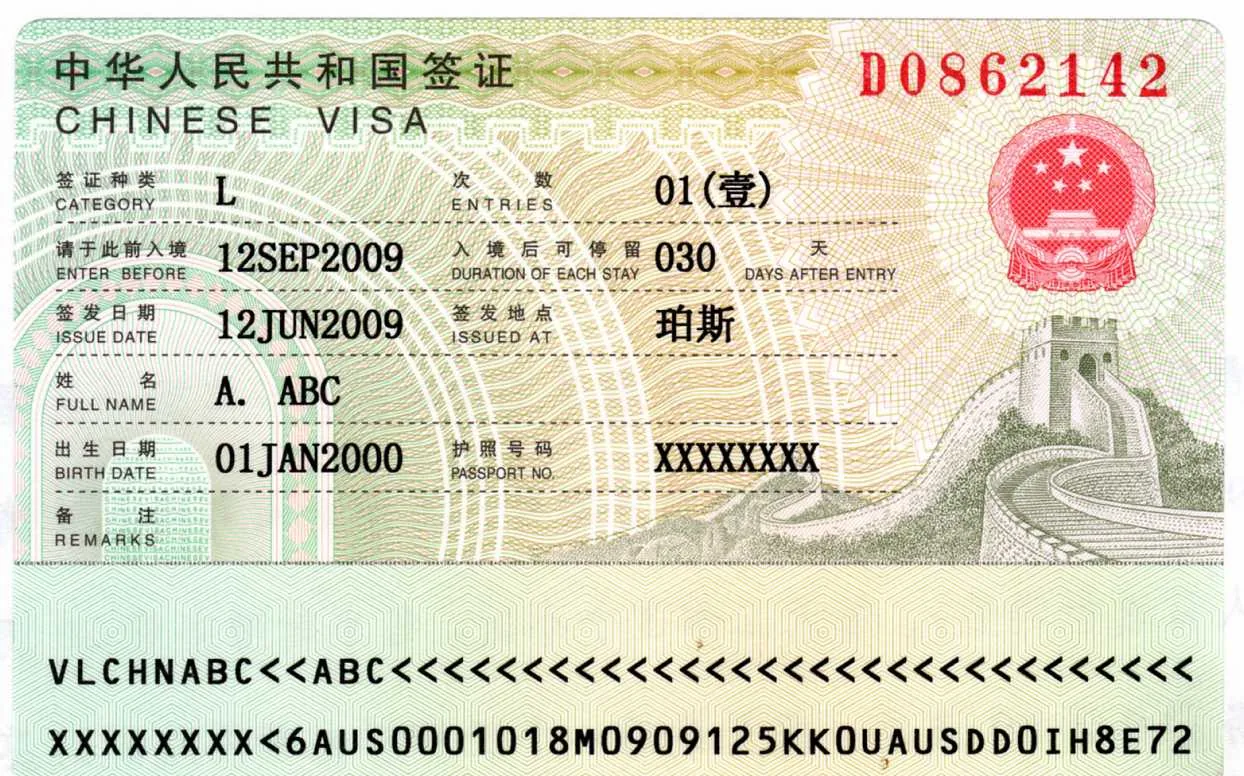
People confuse a visa with a passport, so it is worth being precise. A passport is the identity document your own country issues to let you travel internationally. A visa is a separate endorsement, usually a sticker inside that passport, that grants the holder permission to enter a specific country for a limited purpose and duration. A Chinese visa is issued by a Chinese embassy or consulate before you travel, and the type you hold dictates what you are allowed to do once you land. Visa-free entry, covered next, skips this step entirely for eligible nationalities.
Who can enter China without a visa?
This is where the old rules died. China runs a unilateral 30-day visa-free program that, as of February 2026, covers around 50 countries. Nationals of those countries holding ordinary passports can enter mainland China for business, tourism, family visits, or transit and stay up to 30 days per entry with no visa and no consulate appointment. The program began in December 2023 with France, Germany, Italy, the Netherlands, and Spain, then expanded in waves. Russia joined in September 2025, Sweden in November 2025, and the United Kingdom and Canada were added on 17 February 2026.
The current list, published by China’s National Immigration Administration, includes:
- Europe: the UK, France, Germany, Italy, Spain, the Netherlands, Ireland, Switzerland, Norway, Sweden, Russia, and most of the rest of the continent.
- Asia and the Middle East: Japan, South Korea, Brunei, and the Gulf states of Saudi Arabia, Bahrain, Kuwait, and Oman.
- Oceania: Australia and New Zealand.
- Americas: Canada, Brazil, Argentina, Chile, Peru, and Uruguay.
One large omission stands out: the United States is not on this list. Neither is India, Vietnam, or most of Africa. American passport holders still need either a visa or the transit route described below. The program is currently authorized through 31 December 2026 and is widely expected to be renewed, but that is a policy decision, not a guarantee, so check your nationality against the official list close to your travel date.
The 240-hour visa-free transit route
If your passport is not on the 30-day list, or you want a short stopover on the way somewhere else, China’s transit exemption is the other way in. It now grants up to 240 hours, ten full days, visa-free to travelers from 57 countries, and this list does include the United States, along with the UK, Canada, and most of Europe. As of November 2025 it operates at 65 ports across 24 provinces and regions, including Beijing, Shanghai, Guangzhou, and Xi’an.
There is one firm condition. You must be transiting to a third country or region, not returning to where you came from. A New York traveler flying New York to Shanghai to Seoul qualifies. New York to Shanghai and back to New York does not, and attempting it is treated as illegal entry.
What you may do once you are in has changed, and most guides have not caught up. Under the old 144-hour scheme you were pinned to the region you landed in. Under the 240-hour rule you may travel across provincial boundaries within the permitted areas of those 24 provinces, regions and municipalities, and your exit port does not have to be your entry port. Land at Shanghai, take the train to Xi’an, fly to Chengdu and leave from Beijing, all inside the one window. Stay inside the eligible areas and leave on time and the itinerary is yours.
Do I need a visa for Hong Kong or Macau?
Hong Kong and Macau run their own immigration systems, and this trips up a lot of travelers. A mainland Chinese visa is not valid for Hong Kong or Macau, and entry to those territories does not let you into the mainland. Most Western nationals enter Hong Kong visa-free for 90 days, and British passport holders get 180. Macau commonly grants 30 days visa-free to US, UK, EU, Canadian, and Australian visitors. If you plan to cross from Hong Kong into the mainland and back, remember that each mainland entry is counted, so a multiple-entry visa, or re-qualifying for visa-free entry on the return leg, is what keeps the trip legal.
What type of visa do I need to go to China?
If your nationality is not exempt, or you are staying longer than the visa-free window allows, you apply for one of China’s 12 ordinary visa categories. Pick the one that matches your purpose, because a consulate will reject an application where the visa type and the stated reason for travel do not line up.
- Tourist visa (L): for sightseeing and leisure. Stays run 30 to 60 days per entry, and single, double, or multiple entry are all available. US citizens are routinely issued a 10-year multiple-entry L visa, though each individual stay is still capped at the duration stamped on arrival.
- Business visa (M): for meetings, negotiations, trade fairs, and commercial visits, not employment. It requires a business invitation letter from your Chinese counterpart, and stays are normally 30 to 60 days.
- Non-commercial visit visa (F): for research, academic exchange, and study tours. Stays range from 30 to 90 days.
- Work visa (Z): for people employed in China. It is effectively single-entry: you get roughly 30 days on arrival to convert it into a Temporary Residence Permit valid for 90 days to 5 years. A Notification Letter of Foreigner’s Work Permit is required first.
- Study visa (X1/X2): X1 is for courses longer than 180 days, X2 for shorter ones.
- Private visit visa (S1/S2): S1 is for moving to China long-term to live with immediate family who work or study there; S2 is for shorter family visits. Both require proof of kinship.
- Family reunion visa (Q1/Q2): for the relatives and spouses of Chinese citizens or permanent residents. Q1 is long-term; Q2 is a shorter visit of up to 180 days.
- Crew visa (C): for airline, ship, and train crew of foreign nationality.
- Transit visa (G): for travelers passing through who do not qualify for the visa-free transit exemption above.
Attending the Canton Fair or visiting factories? That is an M visa, and the fair’s official invitation letter is the standard supporting document. See how we handle buyers on the ground in Guangzhou.
Can I extend my visa or get multiple entries?
Yes to both. If you need longer than your visa or exemption allows, apply for an extension at the local Public Security Bureau Exit and Entry Administration office, ideally about a week before your current permission expires. A 30-day tourist extension is common but granted at the officer’s discretion, and a decision usually takes around seven days. Multiple-entry visas are available on both the L and M categories, which is worth requesting up front if you plan to hop out to Hong Kong or a neighboring country mid-trip and come back.
What if I overstay or my application is denied?
Overstaying carries a fine of 500 yuan per day, capped at 10,000 yuan. A genuine one or two day slip, explained in person at the local PSB, may be waived, but there is no formal grace period, and a serious overstay of a month or more can mean 5 to 15 days of detention followed by deportation. Denials are less dramatic. Consulates rarely explain a refusal. Since January 2024 a standard tourist application no longer has to carry an itinerary, hotel bookings or an invitation letter, but the consulate can still ask for them case by case, and a refusal is exactly the case that gets asked. So reapply with the file built out anyway: a firm itinerary, confirmed accommodation, and, for business travel, a properly worded invitation letter. Get the paperwork right the first time and the process is routine.
The short version
Check your nationality first. Around 50 countries now enter mainland China visa-free for 30 days, and 57 get a 10-day transit stay if they are passing through to a third country. If you are American, or staying longer than the exemption allows, you apply for the visa type that matches your reason for travel, most often the L tourist visa or the M business visa. Hong Kong and Macau are separate and have their own, generally more generous, rules. Sort the entry paperwork before you book anything you cannot cancel.
Your dates. My quote.
Twelve hours.
Send your cities, dates and product list. You'll get a fixed written quote, no obligation, no deposit to ask.
superinterpreter · selina@mychinainterpreter.com · Xiamen, China · UTC+8