14 Best Things to Do in Nanjing, China
Nanjing was the first capital of the Ming dynasty and the capital of the Republic of China, and it sits about an hour from Shanghai on the fastest trains. Here are the 14 best things to do in Nanjing, plus how many days to give it, what to eat and how to get there.
 Selina Chen 陈丽明 EN ⇄ 中文 · Travel guide
Nanjing is the old capital most foreign visitors skip, and they are wrong to. It was the first capital of the Ming dynasty, the city where the Taiping rebels set up their Heavenly Kingdom, the capital of the Republic of China, and the scene of the worst atrocity of the war with Japan. It is also one of China’s ancient capitals that still looks the part, with a Ming wall around its center and plane trees shading its main roads. Hotels and restaurants cost less than in Shanghai, and the city is an easy train ride away. If you are building a wider route, see our list of the best places to visit in China.
#1: Visit the Nanjing Massacre Memorial Hall
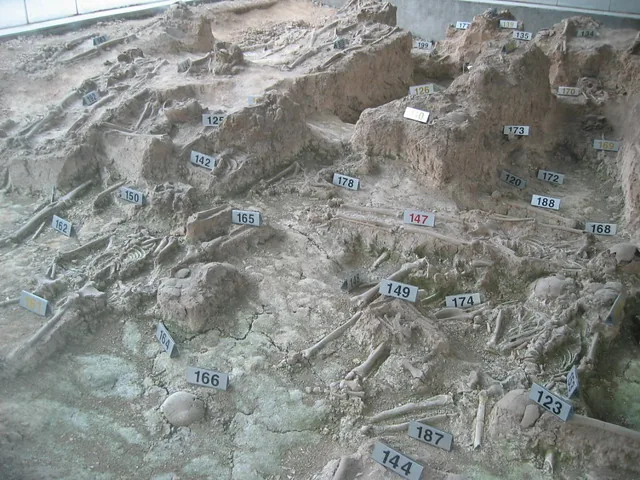
Start with the hardest one. The Memorial Hall of the Victims in Nanjing Massacre by Japanese Invaders stands on the site of a mass grave at Jiangdongmen, and it tells the story of the six weeks that followed the fall of the city on December 13, 1937. The memorial puts the death toll at 300,000. The exhibits are built from testimony, photographs and the records of the foreigners who stayed to run the Nanjing Safety Zone, and one hall preserves excavated remains where they were found. It is quiet, crowded and deeply affecting. Allow two to three hours.
Entry is free, but every visitor needs a real-name, timed reservation through the memorial’s official WeChat account, which is the only booking channel. Foreigners book with a passport number. The hall closes on Mondays, except public holidays.
#2: Climb to the Sun Yat-sen Mausoleum
Sun Yat-sen, the founding father of the Republic of China, died in 1925, and his mausoleum on the southern slope of Purple Mountain was finished in 1929. The design is a long, blue-roofed ascent: a granite stairway of 392 steps rising to a memorial hall with his seated statue, and behind it the vault. Climb it early. The view back down the stairway over the forest is why people come.
Entry is free with a reservation through the Zhongshan Scenic Area WeChat mini-program, booked a few days ahead with a passport. The mausoleum itself is closed on Mondays. Purple Mountain is large, so use the internal sightseeing buses between sites rather than walking the roads.
#3: Walk the Sacred Way to the Ming Xiaoling Mausoleum
Zhu Yuanzhang, the Hongwu Emperor who founded the Ming dynasty, is buried under a wooded mound on Purple Mountain, and his tomb is part of the Imperial Tombs of the Ming and Qing Dynasties World Heritage site. The approach is the best part. The Stone Statue Road, about 600 meters long, is lined with pairs of stone lions, xiezhi, camels, elephants, qilin and horses, and in autumn the ginkgo and maple above them turn yellow and red.
Tickets are 70 yuan, half price for students and seniors aged 60 to 69, and free from 70. Hours are 6:30 to 18:30 from March to November and 7:00 to 17:30 in winter. A 100-yuan Zhongshan Scenic Area pass bundles the Ming Xiaoling with Linggu Temple, the Music Stage and Meiling Palace if you want a full day on the mountain.
#4: Spend a morning in the Nanjing Museum
The Nanjing Museum is one of the great museums of China, with a collection that runs from Neolithic jade to Ming and Qing porcelain, and a Republic-era street rebuilt inside it. It is free, but you book through its WeChat mini-program up to seven days ahead, with tickets released at 18:00, and there are no same-day tickets at the door. Foreigners enter on the passport they booked with. It closes on Mondays. Give it three hours and go straight to the porcelain and the jade.
#5: Walk a section of the Ming city wall
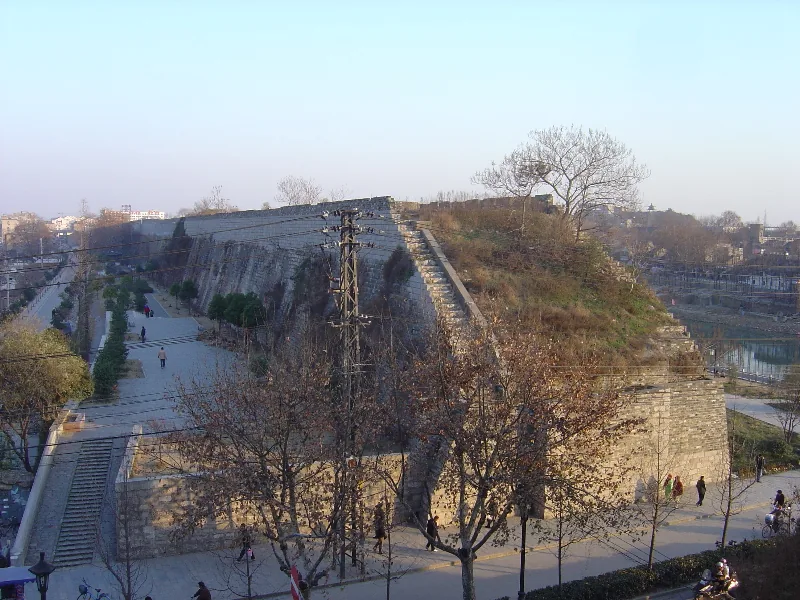
The wall was built between 1366 and 1393, largely by conscripted labor, out of hundreds of millions of bricks, many of them stamped with the names of the officials and kiln workers who made them. It ran about 35 kilometers, and about 25 kilometers of it still stands, which makes it one of the largest surviving city walls anywhere. You do not need to walk all of it.
Two sections are worth the time. Zhonghua Gate on the south side is a gate-fortress of three enclosed courtyards behind four successive gates, with vaults built into the walls to hide soldiers, and the south section of the wall from there costs 50 yuan. The Taicheng section behind Jiming Temple runs along Xuanwu Lake and gives the best view of the lake against the skyline. Under-18s walk the wall free.
#6: See the Confucius Temple and the Qinhuai River at night
Fuzimiao, the Confucius Temple district, is more of a commercial quarter than a religious one, and it is at its best after dark, when the river and the restored Ming and Qing facades are lit up. This stretch of the Qinhuai was the city’s pleasure quarter for centuries, and the Jiangnan Examination Hall beside it was where candidates sat the imperial exams in thousands of tiny cells.
Take a painted boat from the Panchi pier for a loop of about 40 minutes. Then eat your way through the snack streets. The crowds are part of it; come on a weekday evening if you want room to move.
#7: Tour the Presidential Palace
This compound on Changjiang Road was the seat of the Taiping Heavenly King in the 1850s and later the Nationalist government’s presidential office, and its buildings mix a classical Chinese garden, the Xu Garden, with brick office blocks from the Republic era. Tickets are 35 yuan. It is open 8:30 to 18:00 from March 1 to October 14 and 8:30 to 17:00 from October 15 to February, and closed on Mondays. The story is the reason to come, so read up first or bring someone who can explain it.
#8: Spend an early morning at Xuanwu Lake
Xuanwu Lake is the city’s big park: a lake of five islands joined by bridges and causeways, just south of Nanjing Railway Station and right under the city wall. Entry is free. Come early, when the tai chi groups and the ballroom dancers are out, then walk the wall or cross to Jiming Temple, which sits just off its southwest shore.
#9: Climb up to Jiming Temple
Jiming Temple is one of the oldest Buddhist sites in Nanjing, a yellow-walled temple stacked up a hillside next to the city wall, with a pagoda at the top that looks out over Xuanwu Lake. In spring, the cherry trees along Jiming Temple Road below it draw serious crowds. It opens at 7:30 and closes at 17:00. Jiming Temple station on Metro Lines 3 and 4 is at the foot of the hill.
#10: See the Usnisa Palace on Niushou Mountain
The Usnisa Palace, on Niushou Mountain in Jiangning south of the city, opened in 2015 to house a relic said to be a fragment of the Buddha’s skull. Much of it is underground, built into an old mine pit, and the main hall is a gilded dome of carving, mosaic and lighting on a scale that has nothing modest about it. Love it or not, nothing else in China looks like it. The mountain ticket is 145 yuan, and hours are 8:30 to 17:30. It is a half day trip, so pair it with nothing else that afternoon.
#11: See the Porcelain Tower site at Da Bao’en Temple
The Porcelain Tower of Nanjing, built under the Yongle Emperor from 1412, was a nine-story pagoda faced in glazed tiles and one of the most famous buildings in the world to European travelers, until it was destroyed in 1856 during the Taiping war. Today a steel-and-glass tower stands over the excavated foundations as a protective cover, and the museum below displays what came out of the dig, including the stone casket from the crypt. Tickets are 90 yuan. It is just outside Zhonghua Gate, so do the two together.
#12: Cross the Yangtze River Bridge
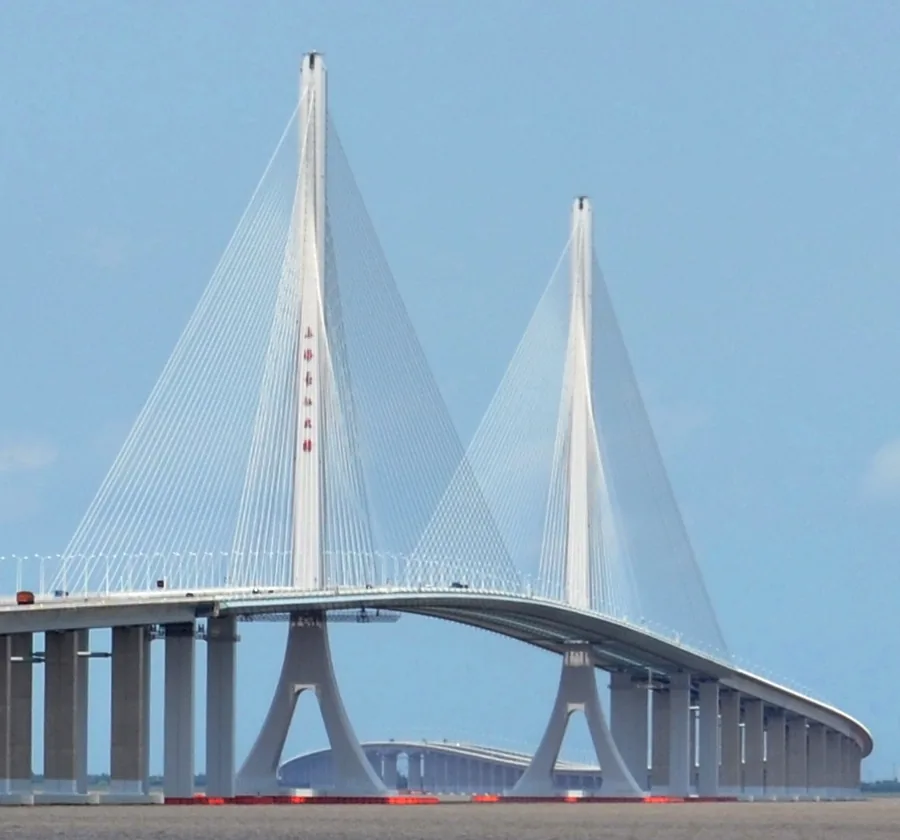
The Nanjing Yangtze River Bridge opened in 1968 as the first bridge over the Yangtze designed and built entirely by Chinese engineers, a double-decker with railway below and road above. It closed for a full renovation and reopened in 2018. The bridge park at the south end, around 15 yuan, has an elevator that takes you up to the road deck and the tower’s viewing platform, and the socialist-realist statues on the towers are worth the trip on their own.
#13: Spend an evening around Xinjiekou and 1912
Xinjiekou is the commercial center of Nanjing, a crossroads of department stores and malls on top of a major metro interchange, and it is at its brightest at night. A short walk northeast, the 1912 district is a block of Republic-era style buildings turned into bars and restaurants, beside the Presidential Palace. For the view over all of it, the 450-meter Zifeng Tower, finished in 2010, has an observation floor on level 72. Go on a clear evening.
#14: Eat Nanjing food
Nanjing is a duck city. The local dish is salted duck, poached and served cold, pale and tender, and it is nothing like Peking duck. Order it from a takeaway counter by weight, the way locals do. The other essential is duck blood vermicelli soup, a cheap bowl of glass noodles in duck broth with cubes of duck blood, tofu puffs and gizzards. Add tangbao soup dumplings and osmanthus sweets, and you have a full day of eating. The snack streets of Fuzimiao are the easy place to try all of it, though locals will tell you the better versions are in neighborhood shops.
Things to do in Nanjing at night
Three of the entries above are evening plans. Take the Qinhuai River boat and walk Fuzimiao after dark (#6), eat your way through Xinjiekou and drink in 1912 (#13), or go up the Zifeng Tower for the lights.
Getting from Shanghai to Nanjing
Take the train. The Shanghai-Nanjing corridor is one of the busiest in China, with well over 200 high-speed trains a day from Shanghai Hongqiao and Shanghai Railway Station. The fastest take about an hour; services that stop at Suzhou, Wuxi and Changzhou on the way take an hour and a half or more. Book on the 12306 app or a booking platform with your passport.
Trains arrive at one of two stations. Nanjing South is the main high-speed hub, on Metro Lines 1, 3, S1 and S3. Nanjing Railway Station is older and more central, right beside Xuanwu Lake. Both are on the metro. Nanjing Lukou International Airport is south of the city, linked to Nanjing South by the S1 airport line.
Getting around Nanjing
The metro reaches most of this list, and you can pay by scanning a QR code in Alipay or WeChat Pay, both of which accept foreign cards. Purple Mountain is the exception: the sites spread across a large forested area, and the scenic area’s own sightseeing buses connect them. Taxis and ride-hailing are cheap for everything else, including the run out to Niushou Mountain.
When to visit Nanjing
Spring and autumn. In late winter and early spring, the plum blossom on Purple Mountain’s Plum Blossom Hill comes out, followed by the cherry trees at Jiming Temple; in October and November, the plane trees and the ginkgo along the Sacred Way turn. Summer is hot, humid and long, and Nanjing has been known for centuries as one of the furnaces of the Yangtze. Avoid the first week of October and Chinese New Year, when the reservation slots for every major site fill days ahead.
How to plan two days of things to do in Nanjing
Day one: Purple Mountain. Sun Yat-sen Mausoleum at opening, the Sacred Way and Ming Xiaoling, then the Nanjing Museum in the afternoon if you booked it. Finish with dinner and the river at Fuzimiao. Day two: the Massacre Memorial Hall in the morning, Zhonghua Gate and Da Bao’en Temple after lunch, and Xuanwu Lake and Jiming Temple before dark. Add a third day for the Usnisa Palace and the Yangtze River Bridge. Plan around Mondays, when most of the essential sites are closed, and book every reservation before you board the train.
Quick answers.
Is Nanjing worth visiting?
How many days do you need in Nanjing?
Do you need to book Nanjing attractions in advance?
Your dates. My quote.
Twelve hours.
Send your cities, dates and product list. You'll get a fixed written quote, no obligation, no deposit to ask.
superinterpreter · selina@mychinainterpreter.com · Xiamen, China · UTC+8