Vaccines For China - What Is Required
China requires no vaccines from most travelers, but the CDC recommends several. Here is what to get, who actually needs the optional shots, and when to see a clinic.
 Selina Chen 陈丽明 EN ⇄ 中文 · Travel guide
 Do you need vaccines for China?
No vaccine is required to enter China, with one narrow exception. Travelers arriving from a country with risk of yellow fever transmission must show a vaccination certificate. That is a border rule, not a health warning about China, and it is explained properly further down.
Required and recommended are different questions. The CDC recommends several vaccines for travelers to China, and a travel clinic will almost certainly suggest more than the zero that the entry rules demand. What follows is what the CDC, the WHO and the UK’s national travel health service actually say, sorted by who needs what.
We are an interpreting company, not a medical authority. Nothing here replaces a consultation. Book one four to six weeks before you fly and take your itinerary with you, because most of the decisions below depend on where in China you are going and for how long, not on the fact that you are going to China.
Routine vaccines to have up to date
The CDC’s first instruction has nothing to do with travel. It is to be current on the routine vaccinations you should already have.
| Vaccine | Recommendation |
|---|---|
| MMR (measles, mumps and rubella) | Be up to date |
| DTaP or Tdap (diphtheria, tetanus and pertussis) | Be up to date |
| Polio | Be up to date |
| Varicella (chickenpox) | Be up to date |
| Seasonal influenza | Be up to date |
| COVID-19 | Be up to date |
China’s own immunization coverage is high, and measles and rubella transmission there has stayed low since 2020. Pertussis and chickenpox cases, however, are still reported regularly, mostly among children and teenagers. The CDC also asks women of reproductive potential to confirm they have had the rubella vaccine before traveling, because of the risk to an unborn child.
One practical note the CDC is firm about: do not plan to finish a vaccination course after you land. Availability of some vaccines in mainland China is limited, and you should not assume you can complete an unfinished series there. Get everything done before departure. Hong Kong is the exception, where international vaccines are generally available.
Recommended vaccines for China: hepatitis A, hepatitis B and typhoid
These are the three that most travelers to China will be offered.
| Vaccine | Who it is for | Why |
|---|---|---|
| Hepatitis A | All previously unvaccinated travelers | Spread through contaminated food and water, or direct contact with an infected person |
| Hepatitis B | Consider for all nonimmune travelers | Endemic in China; spread through blood and body fluids |
| Typhoid | Strongly for rural areas, adventure travel, and visits to friends and relatives | Spread through contaminated food and water |
Hepatitis A is the straightforward one. The vaccine is well tolerated and gives long-lasting protection, so the UK’s travel health service recommends it for every previously unvaccinated traveler rather than trying to sort people by risk.
Hepatitis B is the one most travelers assume does not apply to them. It is endemic to China: the CDC’s China chapter puts nearly a third of the world’s hepatitis B infections there, and routine infant vaccination has all but eliminated mother-to-child transmission while leaving many infected adults unaware of their status. So the CDC does not frame the vaccine as something for people planning tattoos, piercings or sex abroad, though those do raise exposure. Its position is that hepatitis B vaccine should be considered for all nonimmune travelers to China.
Typhoid is where geography matters. The CDC says typhoid is not a significant risk in China’s major urban areas, but that travelers visiting rural areas, adventure travelers and people visiting friends and relatives should strongly consider the vaccine. The vaccine does not settle the question of food and water care, for two reasons the CDC gives. Paratyphoid fever causes similar illness and is more common in China, and no licensed typhoid vaccine covers it. Multidrug-resistant strains of both have also been detected there.
Vaccines for China that only some travelers need
| Vaccine | Who it is for |
|---|---|
| Japanese encephalitis | Stays over a month in endemic areas, or shorter trips with rural or outdoor exposure |
| Rabies | Rural communities, long-term travelers, expatriates, and work involving animals |
| Yellow fever | Certificate rule only, for arrivals from yellow fever countries |
Japanese encephalitis is mosquito-borne and rural. It occurs across China apart from Qinghai and Xinjiang, the risk runs year-round but peaks between May and October, and it is considered low for short trips confined to major cities. The CDC suggests considering the vaccine if you will be in China longer than a month, or if you travel to endemic countries frequently. For shorter trips it comes down to what you will actually be doing: time in rural areas, outdoor activities, or accommodation without air conditioning, window screens or bed nets. The CDC notes that China added the JE vaccine to its national immunization schedule in 2008 and has cut incidence across most of the country, but that a 2018 outbreak in Gansu Province showed transmission is still possible.
If you do get it, the CDC’s schedule for IXIARO is two doses 28 days apart, with an accelerated option for adults aged 18 to 65 that allows the second dose 7 to 28 days after the first. The last dose should be given at least a week before travel, which is the real reason to book early.
Rabies is the one travelers most often talk themselves out of. Animal rabies is endemic in China, particularly among free-roaming dogs, and the CDC cites GeoSentinel surveillance data showing dog bites are common among tourists there. Its guidance is blunt: treat any bite from a dog or other mammal anywhere in China, including in cities, as a high risk for rabies. Exposure risk is highest in Hubei, Hunan, Guangxi and Guizhou.
What tips the decision for many people is not the odds of being bitten but what happens next. The CDC notes that rabies immune globulin meeting international standards is often unavailable in China, so a bite can end a trip and force an evacuation to Bangkok, Hong Kong or home for proper post-exposure treatment. The pre-exposure course is now two doses a week apart, which makes it easier to fit in than it once was, and the CDC says to strongly consider it for travelers to rural communities, long-term travelers and expatriates.
Polio belongs with the routine vaccines, not on this list. The CDC’s China page, as updated in August 2026, gives no China-specific polio advice beyond being up to date on the routine series. In the UK, polio comes in a single combined vaccine with diphtheria and tetanus, so a current tetanus booster covers it. Polio guidance moves with the outbreak picture, so check the CDC’s current destination page before you book a clinic.
Yellow fever is a certificate rule, not a health risk in China
There is no risk of yellow fever in China, so the vaccine is not protecting you from anything you will encounter there. What exists is a paperwork requirement under the International Health Regulations: proof of yellow fever vaccination is required for travelers aged 9 months or over who arrive from a country with risk of yellow fever transmission, and for travelers who have transited for more than 12 hours through an airport in such a country.
In plain terms, if you are flying from the United States, the UK, Europe, Canada, Australia or most of Asia directly to China, this does not apply to you. It applies if your route runs through parts of sub-Saharan Africa or tropical South America, including on a long layover. Certificate requirements for Hong Kong and Macao are generally understood to match the mainland, but confirm them for your specific route rather than assuming.
There is no malaria in China, and there is no malaria vaccine for travelers
The WHO certified China malaria-free on 30 June 2021, putting it among the 40 countries and territories to hold the certification and making it the first in the WHO Western Pacific Region to be awarded one in more than three decades. The standard is demanding: a country must show that indigenous transmission by Anopheles mosquitoes has been interrupted nationwide for at least three consecutive years and that it can stop the disease returning. China reported four straight years of zero indigenous cases before it applied in 2020. In the 1940s the same country recorded around 30 million cases a year.
The CDC’s current assessment is that the risk of malaria transmission in China is very low. Imported cases still arrive, mostly from elsewhere in Southeast Asia, and stopping onward transmission from those is a standing priority, but China is not a malaria destination.
The separate point is that no malaria vaccine exists for travelers, to China or anywhere else. Where travelers do need malaria protection, it is prophylactic tablets taken on a schedule plus disciplined bite avoidance, not a shot. Malaria vaccines do exist: the WHO recommends RTS,S and R21 for children living in malaria-endemic areas, prioritizing areas of moderate and high transmission, on a four-dose schedule from around five months of age. That is a childhood immunization program for high-burden regions, and the WHO’s recommendation does not extend to travelers.
So malaria only becomes your problem in China if it is not really about China: if you are continuing to, or arriving from, a country where malaria is endemic. That is a conversation for the travel clinic, and the answer will involve tablets.
Bite avoidance still matters in China, just for different diseases. Dengue is the one the CDC calls a significant health risk for travelers: epidemics run every four to six years, mostly in the southern provinces, and Guangdong reported more than 40,000 cases in two months during the 2014 outbreak. Use repellent in summer, and year-round in southern Yunnan and Hainan.
Timing: see a travel clinic four to six weeks out
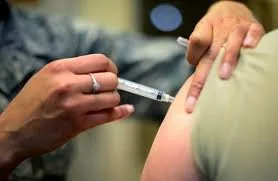
The UK’s travel health service advises arranging an appointment at least four to six weeks before travel. The CDC puts the floor at a month. Either way, book early: some courses need multiple doses spaced days or weeks apart, and some need a final dose a week before you fly, so a late booking narrows what you can actually have.
If you have left it later than that, go anyway. A short-notice appointment is still worth having, and clinicians can often use accelerated schedules. If you have an existing health condition, go earlier than six weeks.
Bring your itinerary, your vaccination history and your dates, and let the clinician decide what your trip actually calls for. Giving several vaccines at one visit is routine practice, so do not skip or space out doses on your own initiative. If the schedule matters for a particular vaccine, your clinician will tell you. Carry a record of what you have had with you on the trip.
Children and immunization schedules
Children follow the same routine schedule, with a few travel-specific adjustments worth raising with your doctor.
Measles is the main one. The UK’s travel health service advises that infants from six months of age who are likely to mix with local people receive MMR early, that MMRV can be used from nine months if MMR is not available, and that a dose given before the first birthday is discounted, so two further doses follow at the normal ages. Childhood schedules differ between countries, so treat that as a prompt to raise early measles dosing with your pediatrician rather than as instructions to follow.
Beyond vaccines, road traffic is the risk that most often catches families out. The CDC records road crashes as one of the leading causes of death in China for children aged 6 to 18. Child seats are now mandatory, but rear seat belts are often unavailable, which is worth checking before you get into a car. Younger children also face higher rabies exposure than adults, because they are more likely to approach an unfamiliar animal.
Medicines and what to pack
Bring all your regular prescription medication in sufficient quantity for the whole trip, plus a margin. Chinese pharmacies will often sell prescription drugs over the counter, but the CDC warns those can be counterfeit, substandard or contaminated. Replacing your own supply locally is not a plan.
China permits travelers to bring in controlled medications in quantities reasonable for personal use. Carry a copy of the written prescription, and where you can, a signed note from the prescribing physician on letterhead. Customs may keep the copy. Do not arrange to have medication mailed to you in China: customs can hold it and charge high duties even when it is plainly for personal use.
If you are going anywhere high, and Tibet, Shangri-La, Lijiang and Xining all qualify, carry your own acetazolamide. Availability in China is unreliable. Altitude illness is a risk above 2,500 meters, and Lhasa sits at 3,658 meters. Otherwise, pack a basic travel health kit and insect repellent.
Food and water safety
Tap water is not safe to drink anywhere in mainland China, including in major cities. Hong Kong is the exception. Hotels provide boiled or bottled water, and bottled water is available in every convenience store and restaurant.
The CDC rates travelers’ diarrhea risk as low in luxury accommodation and moderate everywhere else. Avoid undercooked fish and shellfish and unpasteurized milk products. Hepatitis E is endemic in China, usually picked up from contaminated well water or undercooked meat and seafood, and pregnant women in the third trimester face particularly severe disease from it. Brucellosis occurs in pastoral areas, so avoid raw milk and undercooked meat in Inner Mongolia, Jilin, Heilongjiang, Shandong, Gansu, Hebei and Xinjiang. Skip freshwater swimming.
Air quality
Chinese air quality has improved a great deal, and the CDC credits a dramatic fall in fine particulate matter, especially in Beijing. It remains a problem elsewhere: in 2022, many of the world’s 200 cities with the worst air quality were in China. Sandstorms blowing in from southern Mongolia can also blanket Beijing and neighboring provinces with little warning.
Short exposure mostly irritates the eyes and throat, and the people most affected are those with cardiovascular or chronic respiratory conditions, children and older adults. The surgical-style masks you will see everywhere do not filter fine particulates; the CDC’s advice is that a properly fitted N95 can. If you have asthma or a heart condition, check the forecast and plan indoor days.
Medical care and travel health insurance in China
Buy travel health insurance, and make sure it includes medical evacuation. The CDC is emphatic about this, and the reason is procedural rather than clinical: many Chinese hospitals do not accept foreign medical insurance, and will expect a deposit covering the anticipated cost of treatment before they treat you.
Care quality varies enormously by city. Beijing, Shanghai, Guangzhou, Shenzhen and Hong Kong have facilities that meet international standards. Elsewhere, larger hospitals often have a VIP ward, gaogan bingfang, with English-speaking staff, though the CDC describes the standard of care there as somewhat unpredictable. In rural areas, rudimentary care may be all there is.
One difference catches most first-time visitors out. There is no recognized paramedic profession in China, and ambulances may be staffed by doctors or nurses with widely varying training. In rural areas the CDC’s own advice is that an injured traveler should strongly consider taking a taxi to the nearest major hospital rather than waiting for an ambulance.
Common questions about vaccines for China
Are any vaccines mandatory to enter China? Only yellow fever, and only if you are arriving from a country with risk of yellow fever transmission or have spent more than 12 hours in transit through an airport in one. Everything else is recommended, not required.
Do I need a malaria vaccine for China? No. There is no malaria in China, and no malaria vaccine exists for travelers anywhere. If your wider trip includes a malaria-endemic country, ask a travel clinic about prophylactic tablets.
How far in advance should I get vaccinated? Four to six weeks before departure. Some courses need several doses, and some need the final dose at least a week before you fly.
Do I need Japanese encephalitis vaccine for a two-week city trip? Probably not. Risk is considered low for short trips limited to major cities. It becomes a real question for stays over a month, or shorter trips with rural time, outdoor activity or unscreened accommodation.
Is the rabies vaccine worth it if I am only visiting cities? Ask your clinic. The CDC treats any mammal bite anywhere in China, cities included, as high risk, and internationally standard rabies immune globulin is often unavailable there, which is what turns a bite into an evacuation.
Can I get vaccinated after I arrive in China? Do not count on it. The CDC advises against assuming you can complete an unfinished vaccine series in mainland China, because availability of some vaccines is limited.
How much do travel vaccines cost? It varies far too much by country, clinic and insurance plan for any honest page to quote a number. Some are covered by routine health care, some are not. Ask when you book the appointment.
Once your health admin is sorted, the rest of the preparation is logistics. Our travel to China checklist covers documents, money and connectivity, and if you are still deciding where to go, start with the best places to visit in China.
Your dates. My quote.
Twelve hours.
Send your cities, dates and product list. You'll get a fixed written quote, no obligation, no deposit to ask.
superinterpreter · selina@mychinainterpreter.com · Xiamen, China · UTC+8