Can You Drink Tap Water in Hong Kong? Some Things to Know
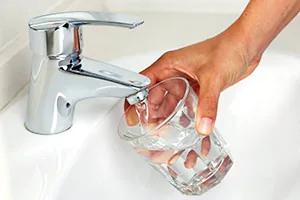
Yes, you can safely drink the tap water in Hong Kong without boiling it. Here is where the water comes from, how it's treated to international standards, and the one exception in older buildings worth knowing about.
 Selina Chen 陈丽明 EN ⇄ 中文 · Travel guide
 Thirsty from your long travels and wondering can you drink the tap water in Hong Kong? Here is the short answer first: yes, you can safely drink Hong Kong tap water without boiling it. The Water Supplies Department supplies water in full compliance with the World Health Organization’s Guidelines for Drinking-water Quality, the same benchmark used across the USA and Western Europe, and calls Hong Kong one of the safest places in the world for drinking water. The one real risk is not in the mains at all. It sits in the plumbing of some older buildings, where lead and other heavy metals can leach in from substandard pipe soldering. That is a workmanship problem in a minority of buildings, not a fault in the city’s supply, and a plumbed-in filter removes it. Don’t confuse it with microplastics, which are a separate global issue tied to plastic waste rather than to old metal pipes. If you are a tourist in Hong Kong or you plan to stay for a while, tap water is a perfectly sound choice. There is a reason for that, and that’s what we mean to cover over the next few lines, so you can be well-informed if you are planning a trip to Hong Kong.
Where does the Water in Hong Kong Come From?
First, a correction people get wrong constantly: Hong Kong is not an island. It is a territory made up of Hong Kong Island, the Kowloon peninsula, the New Territories running up to the mainland border, and a couple of hundred outlying islands. What it lacks is not land but freshwater. There is very little natural catchment for a population of this size and density, so the city imports most of what it drinks. Almost 80 to 90% of the water consumed in the region comes from the Dongjiang River and other sources in Guangdong. As with most surface water in China, the Dongjiang has been heavily polluted over the years by farming runoff and factory discharge. The Guangdong government has spent the last decade cleaning it up and made real progress, but the raw river water is still not drinkable. Hong Kong solved that end of the problem itself, running the imported raw water through coagulation, sedimentation, filtration and disinfection at some of the region’s most advanced treatment plants before it ever reaches a tap.
So Is the Tap Water in Hong Kong Clean and Drinkable?
If you take the World Health Organization guidelines as the measurable standard, then yes. Since 2017 Hong Kong has run its own formal benchmark, the Hong Kong Drinking Water Standards, pegged directly to WHO guideline values and comparable to EPA and EU limits. All the water supplied to the mains is clean and safe to drink. The Water Supplies Department backs that with over 280,000 water-quality tests a year, and the tests and reports drawn from them are published for anyone to check.
So can you drink tap water in Hong Kong from any building?
The short answer is yes, with one exception worth understanding. Like any dense old city, Hong Kong still has plenty of aging buildings plumbed with metal pipes. Newer construction uses plastic pipework and sidesteps the issue entirely. In the older stock, heavy metals such as nickel, lead and cadmium can leach into standing water, almost always from substandard pipe soldering rather than from anything wrong with the supply. The best-known case was the 2015 lead-in-water scandal, which surfaced at Kai Ching Estate and then turned up across a string of other public housing estates. Investigators traced it to solder that ran up to 41 percent lead at pipe joints. It was addressed with pipe replacement, filters for affected homes, compensation, and tighter monitoring since. Note that this is heavy-metal contamination, a plumbing problem, not the microplastics issue people sometimes lump it in with. If you are in an older building, letting the tap run for a minute or two to clear standing water, or fitting a filter, removes the risk.
What do the Locals Have to Say about Tap Water in Hong Kong?
As unlikely as it sounds given the test results, plenty of Hong Kong residents still don’t trust the supply. The 2015 lead scandal left a long shadow, and for a lot of people the reflex to distrust the tap has simply never gone away. Many still recommend boiling the water first, even though boiling only kills bacteria and does nothing to remove heavy metals or other chemical contaminants. Boiling also drives off the chlorine that keeps the water clean in the first place. That is why the more sensible local habit is a home filter rather than a kettle.
What Does the Science Say About the Tap Water of Hong Kong?
The last analysis made by the Water Supplies Department of the government of Hong Kong Special Administration revealed that the water in Hong Kong is pretty soft, with an alkaline pH level that goes above 8. The water is also low in calcium, and it has very low chlorine residue. The content of minerals is minimal, such as the recommended intake you can get from certain food in Hong Kong. The only real issue expressed in the last report is that the water runs warm in the tap and it needs ice to be enjoyed cold.
Is There a Market for Bottled Water in Hong Kong?
Sadly, the answer to this one is yes. On a misplaced hunch that bottled is healthier, a large share of the population drinks bottled water, and that habit creates a whole separate environmental problem. Hong Kong is a heavy generator of disposable plastic, getting through several million plastic bottles a day. The irony is that most bottled water sold here is just filtered or distilled tap water, so people pay many times over for the same product coming out of the wall, and the discarded bottles pile up. Contrary to what older guides claim, the city is not without recycling infrastructure. Hong Kong runs domestic waste separation across thousands of residential estates, an 800-plus point GREEN@COMMUNITY collection network, and reverse vending machines that pay a small rebate for returned plastic bottles. The recycling rate is still low and plastic waste remains a real problem, but the schemes exist. That is exactly why the government keeps pushing the simplest fix of all, which is getting people to trust that the tap water is safe and clean enough to drink as it is.
Quick answers.
Can you drink tap water in Hong Kong?
Where does Hong Kong's water come from?
Your dates. My quote.
Twelve hours.
Send your cities, dates and product list. You'll get a fixed written quote, no obligation, no deposit to ask.
superinterpreter · selina@mychinainterpreter.com · Xiamen, China · UTC+8